Source adjustable aluminum magnetic track light for Shop, Office, Home
Compare 30 adjustable aluminum magnetic track light options from verified suppliers. These lights feature aluminum bodies, various beam angles, and certifications like CE and RoHS for use in shops, offices, and residential spaces.
Key considerations
Products List


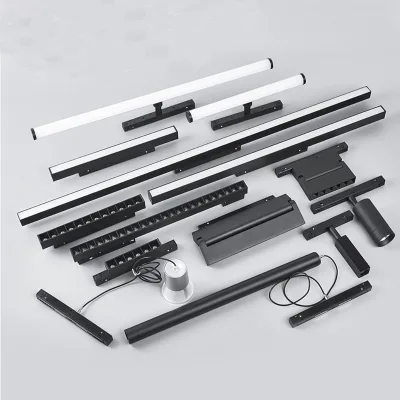
Comprehensive Sourcing Guide
Strategic Sourcing Guide for Adjustable Aluminum Magnetic Track Lights
Understanding the Core Product Architecture
The adjustable aluminum magnetic track light represents a sophisticated category of commercial and residential lighting solutions designed for flexibility and durability. At the heart of this product lies a specific material composition, where the lamp body is predominantly constructed from aluminum or aluminum alloy. This choice of material is critical for thermal management, ensuring that the heat generated by the LED source is dissipated efficiently to maintain performance and longevity. The structural integrity of the fixture is further enhanced by the use of die-casting aluminum in certain high-performance models, providing a robust housing that can withstand the mechanical stress of frequent adjustment.
The defining characteristic of this product category is the magnetic mounting mechanism. Unlike traditional screw-in track heads, magnetic systems allow for rapid installation and removal without tools. This feature facilitates easy maintenance and the ability to reconfigure lighting layouts as space requirements change. The "adjustable" nature of these lights typically refers to the ability of the head to pivot, rotate, or tilt on the magnetic rail, allowing buyers to direct the beam precisely where needed. This adjustability is often paired with a beam angle of 120 degrees, which provides a wide spread of illumination suitable for general ambient lighting, though specific applications may require narrower angles depending on the optic design.
The optical system within these fixtures often utilizes a PC (Polycarbonate) diffusion lens or a clear glass option, depending on the desired aesthetic and light quality. The material combination of Aluminum and PC is frequently observed, balancing the thermal conductivity of the metal with the light-transmitting properties of the plastic. The light source itself is consistently LED-based, offering significant advantages over traditional incandescent or halogen track lights in terms of energy efficiency and lifespan. Buyers should note that the LED chips used in these systems are often sourced from reputable manufacturers, such as Osram, which can influence the overall color consistency and reliability of the light output.
Technical Specifications and Performance Metrics
When evaluating adjustable aluminum magnetic track lights, buyers must scrutinize a specific set of technical parameters that dictate performance. The input voltage is a fundamental specification, with 24V being a common standard for low-voltage LED track systems. This lower voltage enhances safety, particularly in commercial environments where the lights may be installed in areas accessible to the public. The power efficiency is another critical metric, with observed performance figures reaching up to 100 lumens per watt (lm/W). This high efficacy ensures that the lighting solution delivers bright illumination while minimizing energy consumption.
Color rendering is paramount for applications where accurate color perception is essential, such as retail displays or art galleries. The Color Rendering Index (CRI) for these lights varies, with some models offering a CRI of Ra>90, which indicates excellent color fidelity. Other models may have a CRI of 80, which is suitable for general office or residential use but may not be ideal for high-end retail environments. The color temperature range is equally important, with options spanning from warm white (around 2700K) to cool white (up to 6500K). Some fixtures support single-color emission, while others offer a broader range of color temperatures to match different interior design schemes.
Flicker performance is a subtle but critical technical attribute that affects visual comfort. High-quality adjustable track lights should exhibit a flicker rate of less than 3%, ensuring a stable light output that prevents eye strain and headaches during prolonged exposure. The light source technology often employs COB (Chip-on-Board) LEDs, which provide a uniform light distribution and a high density of light output in a compact form factor. The lifespan of these fixtures is substantial, with observed figures reaching 50,000 hours, significantly reducing the frequency of replacements and maintenance costs over the life of the installation.
Compliance and Certification Verification
Navigating the regulatory landscape is a non-negotiable aspect of sourcing adjustable aluminum magnetic track lights. The market is populated with products that carry various certifications, and buyers must verify that the specific units they purchase meet the safety and environmental standards required for their target markets. Common certifications observed in this category include CE, which indicates conformity with health, safety, and environmental protection standards for products sold within the European Economic Area. Additionally, RoHS (Restriction of Hazardous Substances) compliance is frequently cited, ensuring that the product does not contain specific hazardous materials like lead or mercury.
For markets requiring higher levels of safety assurance, certifications such as GS (Geprüfte Sicherheit), LVD (Low Voltage Directive), and EMC (Electromagnetic Compatibility) are essential. These certifications verify that the product is safe to use and does not emit excessive electromagnetic interference. In North America, ETL and UL certifications are critical indicators of safety compliance. Similarly, for markets in Japan and Australia, PSE and SAA certifications respectively are mandatory. The presence of multiple certifications, such as a combination of CE, EMC, ETL, FCC, LVD, PSE, RoHS, SAA, UL, and VDE, suggests a product designed for global distribution and high regulatory compliance.
It is also important to verify local certification requirements, such as CCC (China Compulsory Certification) for products manufactured in or sold within China. The product origin is often listed as Guangdong, China, a major hub for lighting manufacturing. Buyers should ensure that the supplier can provide valid documentation for the specific certifications claimed, as these documents are often required for customs clearance and building code inspections. The absence of these certifications can lead to significant legal and financial risks, including product recalls or rejection at the border.
Cost Drivers and Procurement Economics
The pricing of adjustable aluminum magnetic track lights is influenced by a complex interplay of factors, including material costs, certification expenses, and production volume. The observed price range for these products in the market spans from approximately $0.60 to $38.00 USD. This wide variance reflects differences in component quality, brand reputation, and the level of customization offered. Lower-priced units may utilize standard aluminum alloys and generic LED chips, while higher-priced models often feature premium materials like die-casting aluminum, high-CRI Osram chips, and advanced thermal management systems.
Minimum Order Quantity (MOQ) is another significant economic factor. The observed MOQ range varies from 1 unit to 300 units. For buyers seeking to test a new product line or fulfill small-scale projects, suppliers offering low MOQs are advantageous. However, larger orders typically benefit from economies of scale, resulting in a lower unit cost. The customization options available, such as specific color temperatures, beam angles, or housing finishes, can also impact the final price. Customization is generally available, but it may require higher MOQs or longer lead times to accommodate the specific production runs.
Packaging standards also play a role in the overall cost structure. Products are typically packed in individual boxes, often combined with cartons for bulk shipping. The standard packaging dimensions are often around 18x7x18 cm, which affects shipping logistics and freight costs. Buyers should consider the total landed cost, which includes the unit price, shipping, insurance, and any applicable tariffs. The warranty period, often ranging from 3 to 5 years, is another indicator of value. A longer warranty period may suggest higher manufacturing quality and a more confident supplier, potentially justifying a higher initial investment.
Typical Applications and Design Integration
The versatility of adjustable aluminum magnetic track lights makes them suitable for a wide array of applications. In commercial settings, these lights are frequently used in shops and retail environments where highlighting merchandise is crucial. The ability to adjust the beam angle allows retailers to direct light precisely onto products, enhancing visibility and appeal. In office spaces, the high CRI and flicker-free performance contribute to a comfortable working environment, reducing eye strain for employees. The modern style and sleek aluminum finish of these fixtures also make them an aesthetic choice for contemporary office designs.
Residential applications are equally common, with these lights being installed in homes to provide flexible lighting for living rooms, hallways, and kitchens. The adjustable nature of the lights allows homeowners to change the lighting atmosphere based on the time of day or the activity being performed. The "Home" application is explicitly noted for certain models, indicating their suitability for domestic use. The installation methods, which include track and ceiling mounting, offer flexibility in how the lights are integrated into existing architectural structures.
The optical design, featuring PC diffusion or clear glass options, allows for different lighting effects. The PC diffusion optic provides a softer, more uniform light distribution, ideal for general ambient lighting. In contrast, clear glass options may be used where a more direct and focused light is desired. The shape of the fixture, often square or rectangular, complements modern interior design trends. The switch type, which can be rotary or button-based, adds to the user experience, allowing for easy control of the lighting intensity or color temperature in smart home integrations.
Supplier Evaluation and Quality Assurance
Selecting the right supplier is critical to ensuring the quality and reliability of adjustable aluminum magnetic track lights. Buyers should prioritize suppliers who demonstrate a clear understanding of the technical specifications and compliance requirements. The place of origin, typically Guangdong, China, indicates a region with a mature lighting industry, but it is essential to verify the specific factory's capabilities and reputation. A reputable supplier will provide detailed product data sheets, including test results for CRI, lumen output, and flicker performance.
Quality control processes should be a key part of the supplier evaluation. Buyers should inquire about the supplier's testing protocols, including burn-in tests, thermal imaging, and drop tests to ensure the durability of the aluminum housing and the magnetic connection. The warranty terms, ranging from 3 to 5 years, are a strong indicator of the supplier's confidence in their product. A longer warranty period often implies that the supplier has robust quality control measures in place to minimize defects and returns.
Transparency regarding the supply chain is also important. Buyers should ask about the source of the LED chips, such as Osram, and the quality of the aluminum alloy used. Suppliers who are willing to share this information demonstrate a commitment to quality and are more likely to deliver products that meet the buyer's expectations. Additionally, the supplier's ability to handle customization requests, such as specific packaging or branding, should be assessed. The availability of customization is a positive sign, but the lead time and minimum order requirements for these customizations must be clearly defined.
Long-Term Procurement and Lifecycle Management
Sourcing adjustable aluminum magnetic track lights is not just a one-time transaction but a long-term partnership that requires careful planning. The lifespan of these fixtures, often reaching 50,000 hours, means that they will remain in service for many years. This longevity reduces the frequency of replacements but also necessitates a strategy for long-term maintenance and support. Buyers should ensure that the supplier can provide spare parts, such as replacement LEDs or magnetic heads, for the duration of the product's life.
The warranty period is a crucial factor in long-term procurement. A 5-year warranty offers greater peace of mind compared to a 3-year warranty, as it covers a longer period of potential defects. However, buyers should carefully read the warranty terms to understand what is covered and what is excluded. Some warranties may be limited to the LED source, while others may cover the entire fixture. Understanding these terms is essential for managing the total cost of ownership.
As lighting technology continues to evolve, buyers should consider the future-proofing of their installations. The support for dimmable features and the availability of various color temperatures ensure that the lighting system can adapt to changing needs. The magnetic mounting system also offers the advantage of easy upgrades; if new LED technology becomes available, the heads can be swapped out without replacing the entire track system. This flexibility is a significant advantage in the long term, allowing buyers to keep their lighting installations current without incurring high replacement costs.
| Feature | Observation | Procurement Implication |
|---|---|---|
| Material | Aluminum / Die-Casting Alum | Ensures thermal management and durability; verify alloy grade. |
| Certifications | CE, RoHS, UL, ETL, CCC, etc. | Mandatory for market entry; verify specific documents for target region. |
| Lifespan | 50,000 Hours | Reduces maintenance frequency; check warranty coverage duration. |
| CRI | Ra>90 or 80 | Select based on application (Retail vs. General Office). |
| Voltage | 24V | Enhances safety; verify driver compatibility with existing systems. |
| Adjustability | Pivot/Tilt on Magnetic Rail | Allows reconfiguration; check mechanical stability of joints. |
| Warranty | 3 to 5 Years | Indicates quality confidence; review terms for exclusions. |
In conclusion, sourcing adjustable aluminum magnetic track lights requires a balanced approach that considers technical performance, regulatory compliance, cost efficiency, and long-term value. By carefully evaluating the specifications, verifying certifications, and selecting a reputable supplier, buyers can secure a lighting solution that meets their specific needs and delivers reliable performance for years to come. The flexibility of the magnetic system and the durability of the aluminum construction make these lights a versatile choice for a wide range of applications, from high-end retail to modern residential spaces.
FAQs
What certifications do adjustable aluminum magnetic track lights have?
These lights typically carry CE, RoHS, and CCC certifications. Some models also include GS, LVD, EMC, ETL, UL, PSE, SAA, and VDE marks to ensure global safety compliance and regulatory adherence for various export markets.
How long is the lifespan of these LED track lights?
The observed lifespan reaches 50,000 hours for high-performance units. This extended duration reduces maintenance frequency, though specific models may vary, and warranty periods generally range from three to five years depending on the supplier.
Which materials are used for the lamp body construction?
The lamp body is primarily constructed from aluminum or aluminum alloy. Some high-performance models utilize die-casting aluminum to enhance thermal management and structural durability while maintaining a modern aesthetic finish.
Can these lights be customized for specific projects?
Yes, customization is available for various product attributes. Buyers can often request specific beam angles, color temperatures, or housing finishes, though custom orders may require higher minimum order quantities or adjusted lead times.
What is the input voltage for these magnetic track systems?
The standard input voltage is 24V for these low-voltage LED systems. This voltage level enhances safety in commercial and residential installations while ensuring efficient power delivery to the LED chips and driver components.
Where are these adjustable track lights manufactured?
The products originate from Guangdong, China, a major manufacturing hub for lighting solutions. This region provides access to a mature supply chain, ensuring competitive pricing and efficient logistics for international buyers seeking these fixtures.
What is the typical beam angle for these fixtures?
A common beam angle is 120 degrees, providing wide illumination suitable for general ambient lighting. Specific applications may utilize different optics, but this wide angle is standard for versatile commercial and residential use cases.